Preserve the workflow
Login, labels, cooler temperature, departmental worklists, analyst review, QA review, reportable status, emailed reports, and monthly invoicing should map to how the lab already operates.
Southeastern Labs and Enersolv do not need another generic system demo. You need confidence that sample login, worklists, review, reporting, EDDs, standards, scheduling, and invoicing can move without another hard-cutover nightmare.
You have been through enough LIMS installs to know the pain: big vendors, forced migrations, missing sample codes, disconnected review screens, and workflows that make a strong lab slower.
Login, labels, cooler temperature, departmental worklists, analyst review, QA review, reportable status, emailed reports, and monthly invoicing should map to how the lab already operates.
EDD formats, reagent standards, recurring bottle kits, instrument uploads, subbed-result addendums, and multi-location operations deserve direct proof - not vague feature language.
The migration should be phased: discovery, workflow mapping, prototype, data migration plan, user acceptance, and go-live only when the core paths are ready.
Clearline's stance: use the LIMS to support the mature lab process you already built, not force the lab to reorganize around a vendor's favorite screen layout.
The screenshots below are from a live Clearline LIMS demo environment. They show the system structure we would use as the starting point, then configure around Southeastern's methods, exports, report formats, client rules, and review process.
Clearline separates reception pending, received, to-be-verified, verified, published, dispatched, cancelled, and invalid work so staff can work from operational queues instead of hunting through one flat list.
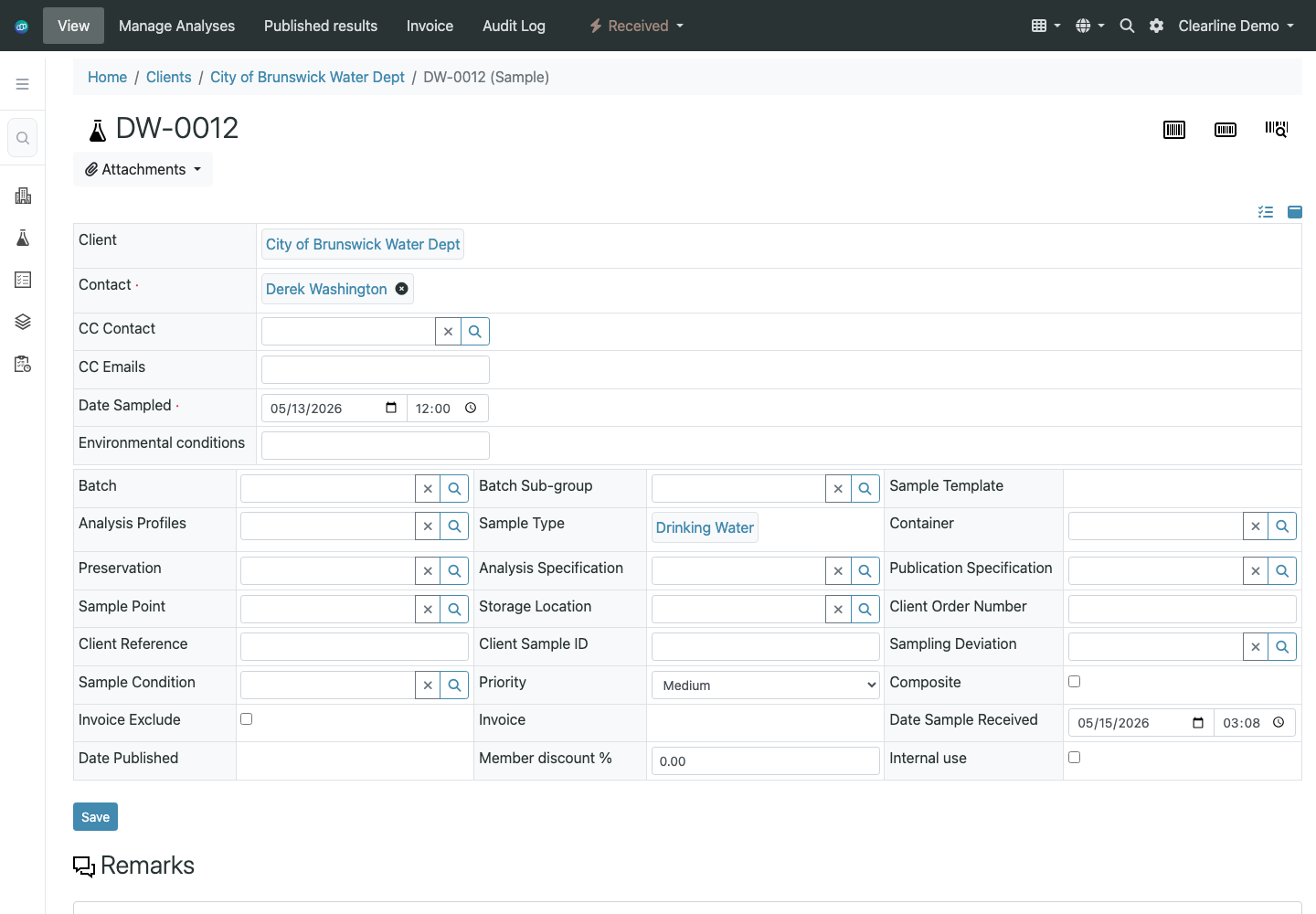
For Southeastern, the intake screen would be configured around the details your login team actually captures: cooler temperature, COC details, bottle/container expectations, sample point, client reference, and received date.
Shown below: sample queue + sample record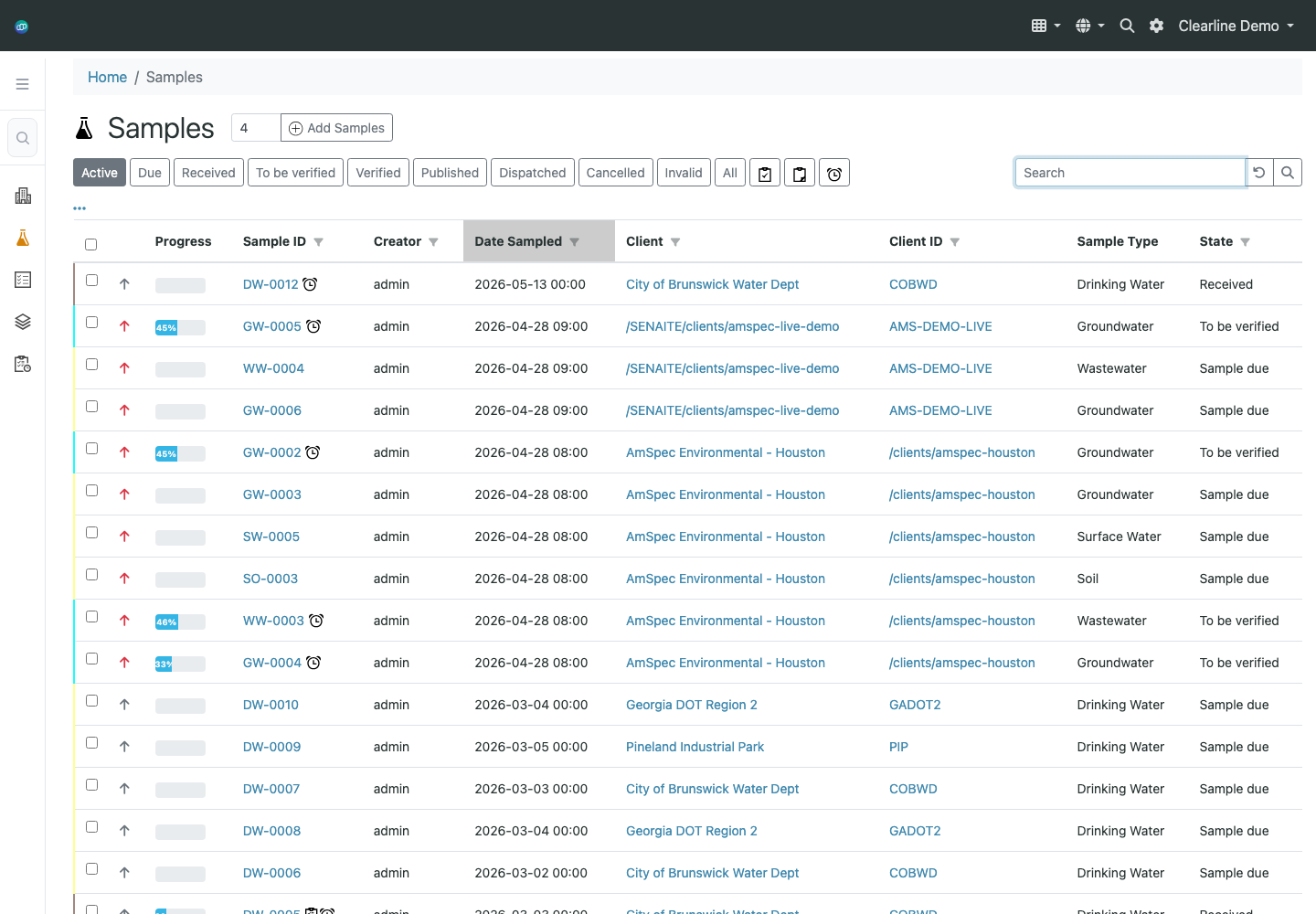
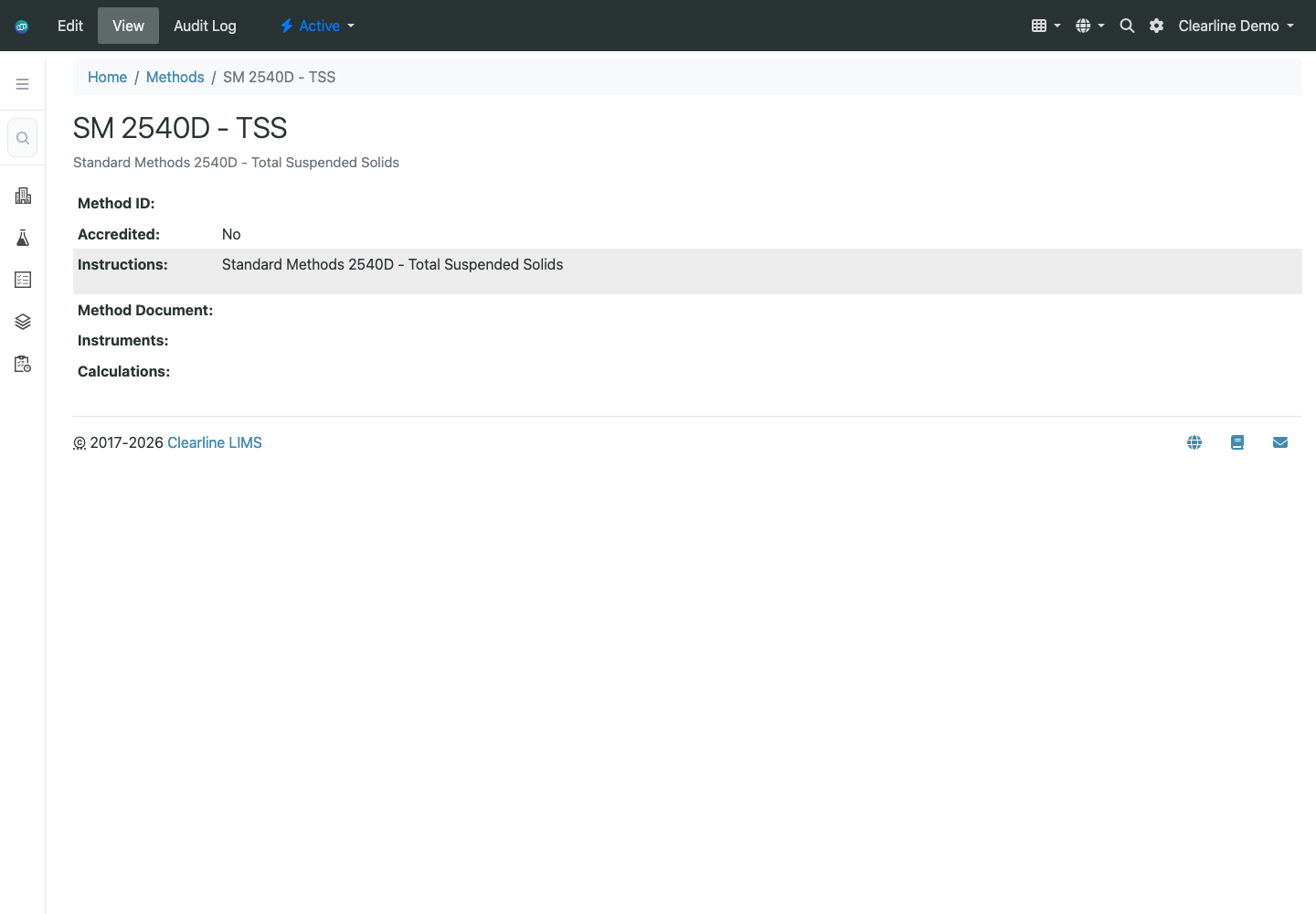
The LIMS keeps methods as configured objects rather than loose text on a report. That gives the implementation a stable place to connect method instructions, accreditation status, calculations, instruments, worksheets, and reporting rules.
A focused validation step would be to configure one Southeastern TSS package end-to-end: login requirements, worksheet inputs, calculation/result fields, QA exceptions, report wording, and EDD mapping.
Shown below: method catalog + SM 2540D TSS record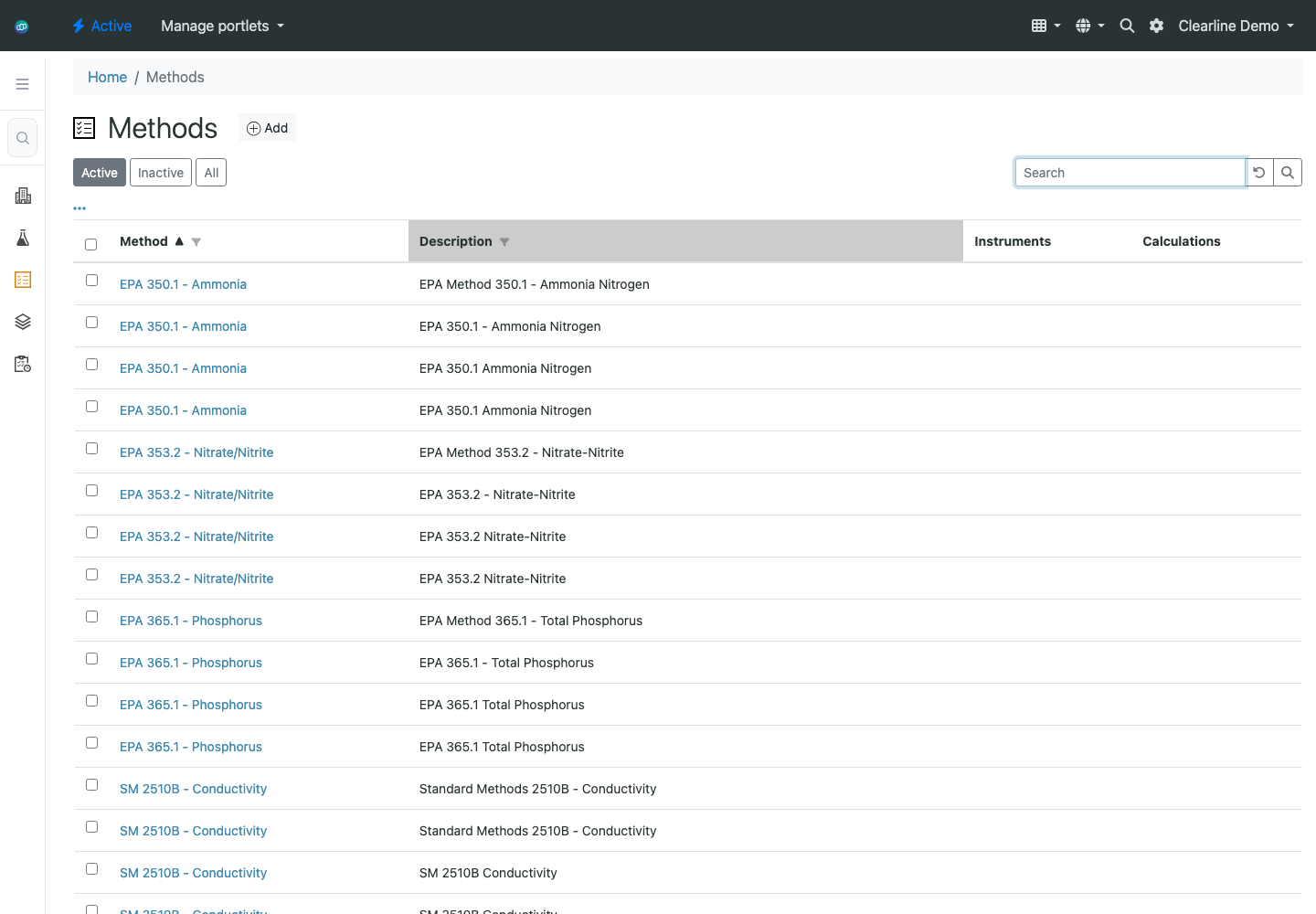
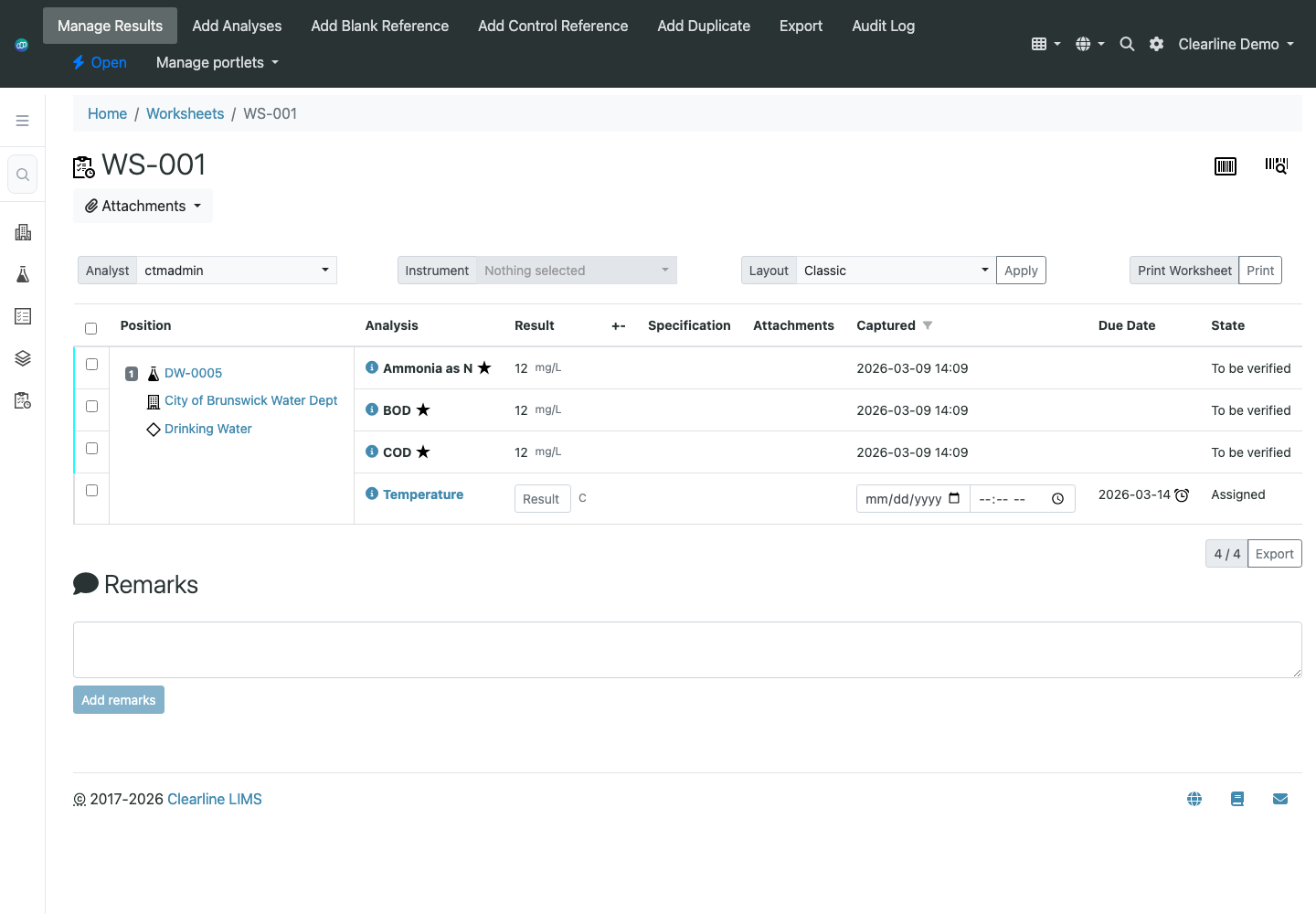
The demo shows worksheets with analyst assignment, instrument filters, templates, samples, routine analyses, QC analyses, and result-management actions.
For Southeastern, we would start with one export from a key instrument, document the column mapping and sample-matching rules, then prove the import into worksheet results before committing that path to go-live scope.
Shown below: worksheet queue + worksheet result screen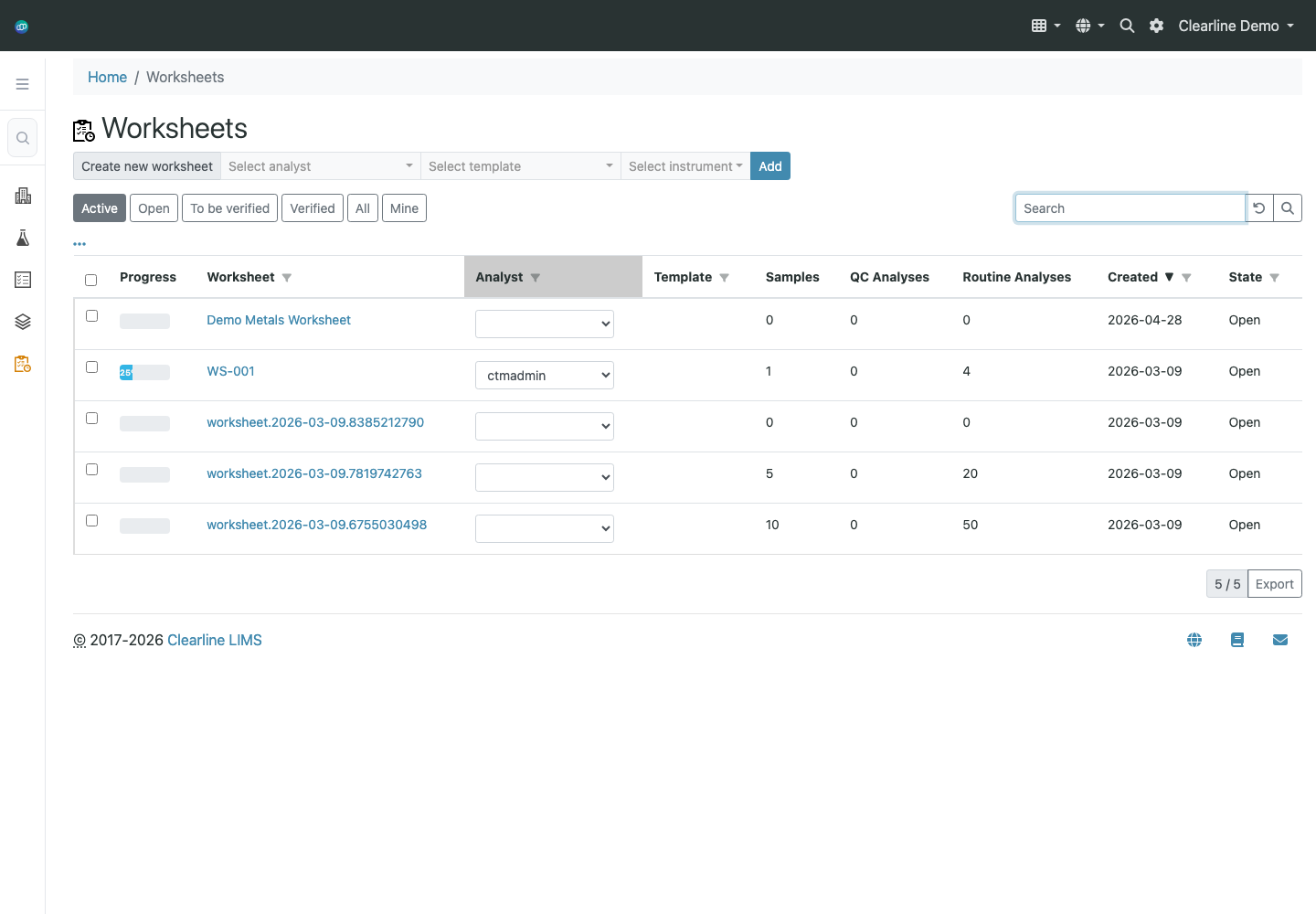
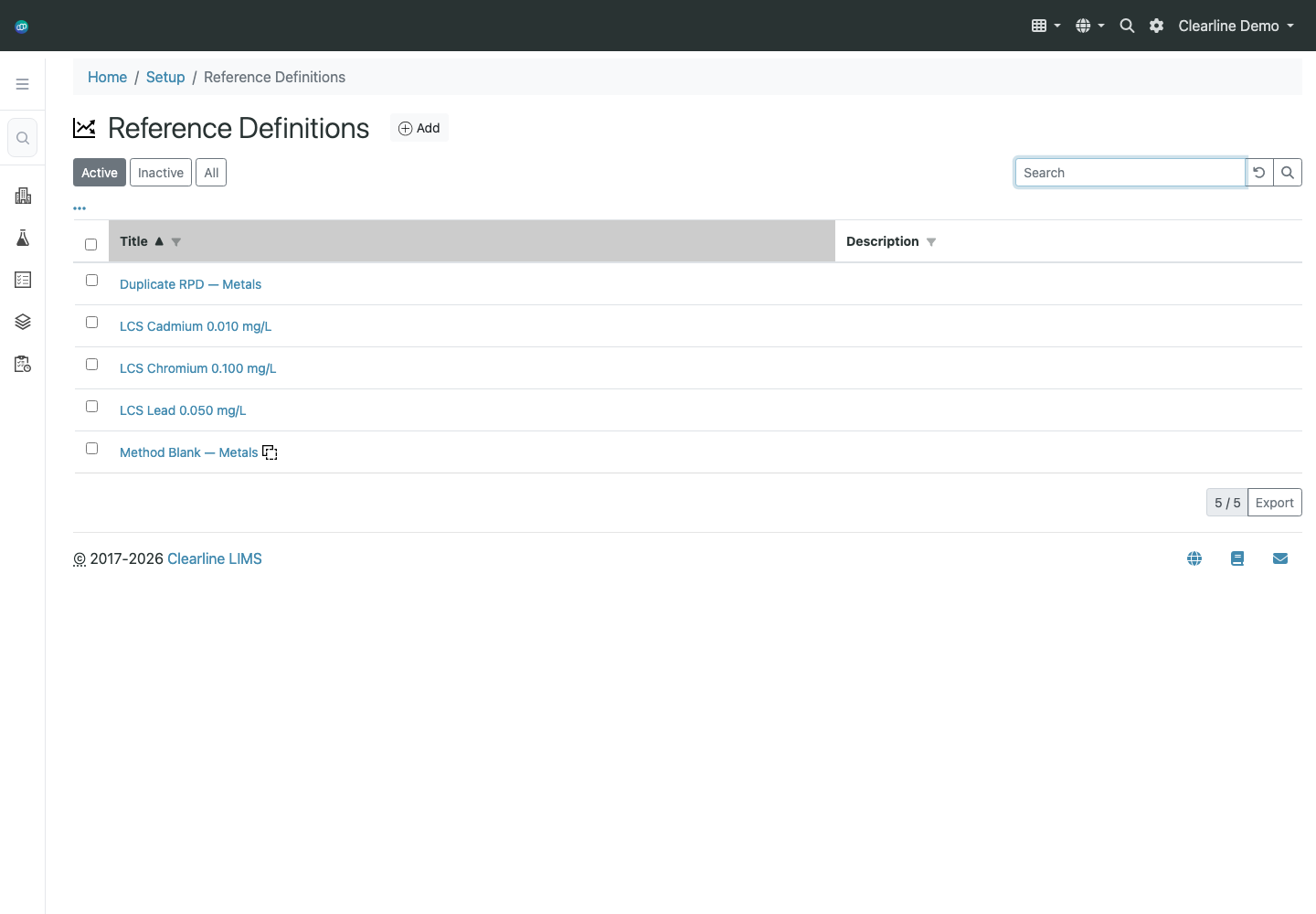
The foundation is already present: instruments, instrument types, manufacturers, suppliers, storage locations, reference definitions, labels, and lab departments all exist as managed setup areas.
A focused validation step would be one standard/reagent example with supplier, lot, prep date, expiration, COA attachment, printable label, and usage trace.
Shown below: instrument registry + reference definitions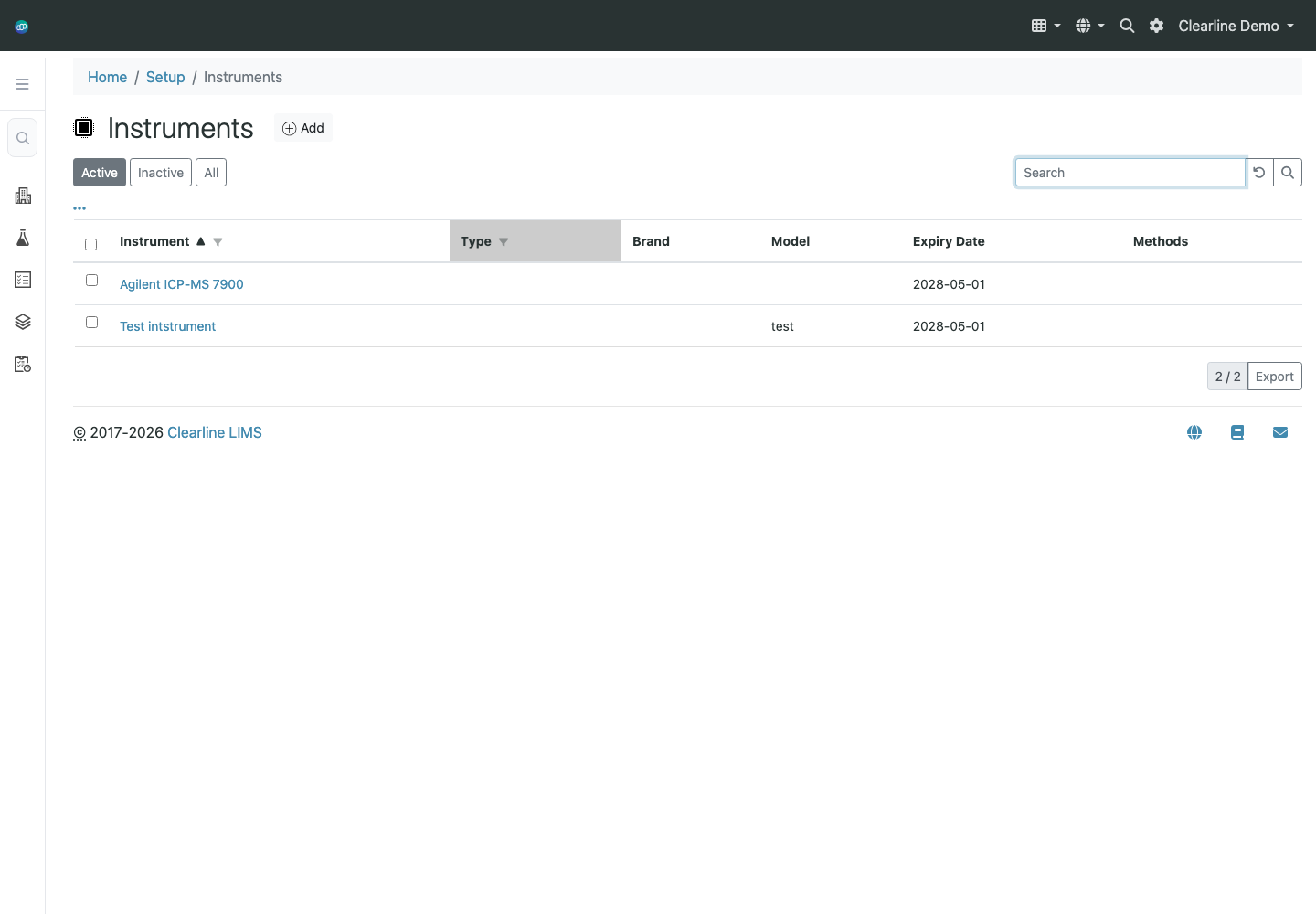
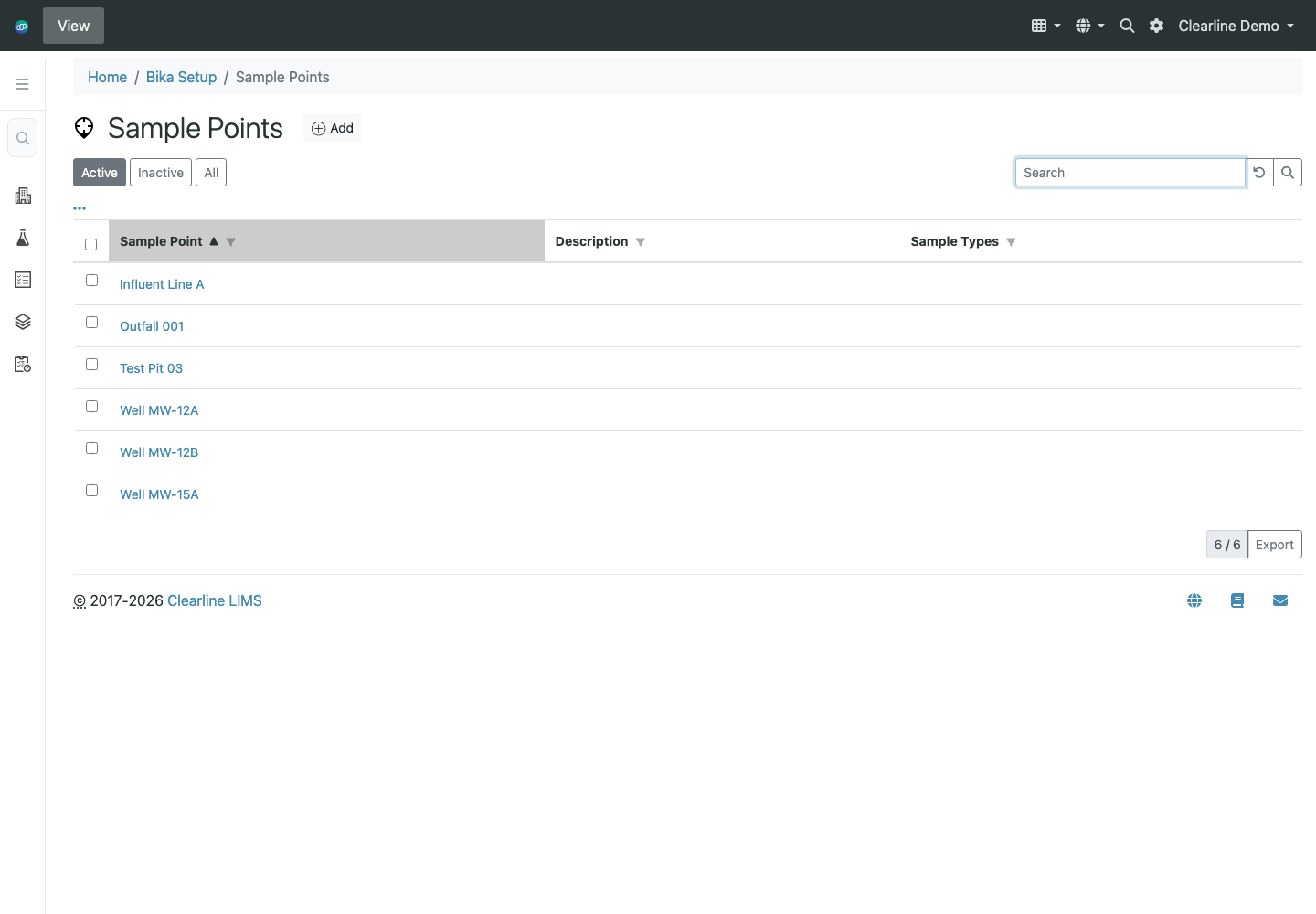
The demo has client records, sample points, analysis profiles, sample templates, sample types, sample containers, sample preservations, and labels in setup. That is the structure needed for recurring work and bottle-prep standardization.
For client-specific EDDs and reports, the most useful next step is to use one of Southeastern's actual report or EDD formats. That lets the prototype prove the real output shape, not just a generic export.
Shown below: clients + sample points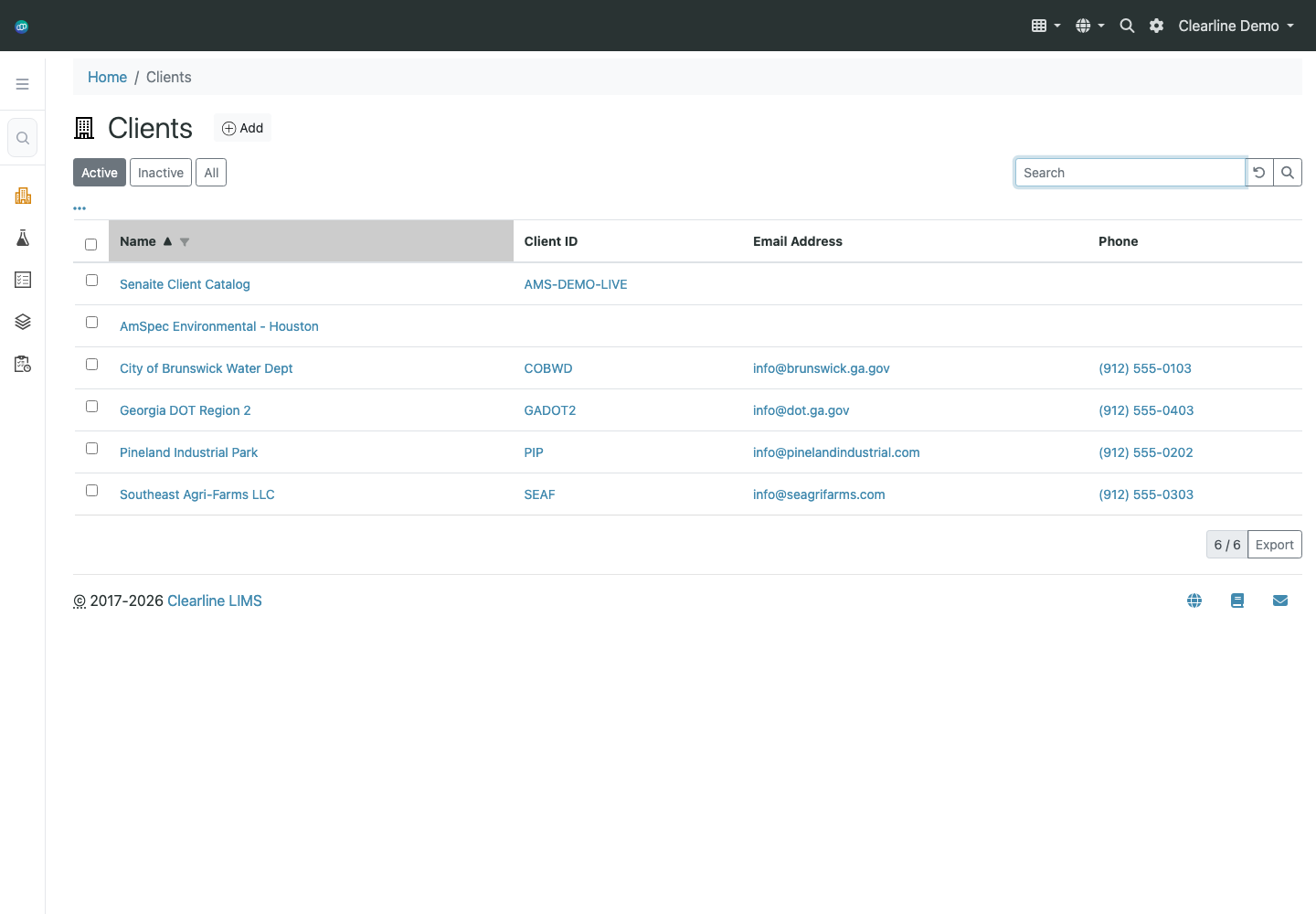
These are representative Clearline workflows for discussion. The production implementation would be configured around Southeastern's methods, client formats, instrument outputs, review rules, and invoicing structure.
A clean operational path: received, batched, analyzed, reviewed, reportable, reported, and invoice-ready.
Analysts can focus on their own tests while managers retain full queue visibility.
Each approval step preserves who changed what, when, and why.
Reported work can roll into end-of-month billing instead of forcing per-sample invoicing.
This is the kind of configured template we would build with Southeastern's real method rules, units, reporting limits, calculations, and review checkpoints.
The real implementation step is to take one of Southeastern's actual TSS examples and configure it end-to-end: login fields, worksheet, calculation, review, report wording, and export behavior.
Clearline can map instrument CSV/export files into sample worksheets so analysts review exceptions instead of retyping rows.
During implementation, we would collect real export files from your instruments, document the mapping rules, and test them against representative samples before go-live.
Standards should be audit-ready: supplier, preparation, expiration, labels, certificate of analysis, and usage history tied back to methods and batches.
For clients sending the same work weekly, monthly, or quarterly, scheduling should produce expected samples, containers, labels, and prep lists before the courier arrives.
Different clients can receive different EDD layouts and report packages without changing the rest of the lab workflow.
Export structure can be configured around the client's required format.
EDD, PDF, addendums, and email delivery can follow the same reportable event.
Format changes are versioned so you know what changed and when.
The goal is boring reliability: prove the core paths, migrate the right data, train by role, and only switch when the lab can run the day without heroics.
Map sample login, departments, worklists, methods, review states, reporting, invoicing, and sister-company access.
Configure representative methods, EDDs, standards inventory, recurring kits, and instrument import samples.
Move the data that matters, test with real users, compare reports, and fix workflow gaps before go-live.
Roll into production with fallback planning, role-based training, and support during the first reporting cycles.
If Clinisys gives you a firm Element timeline, we can build the migration plan around it. If they stay vague, we can help you get ahead of the risk before it becomes urgent.